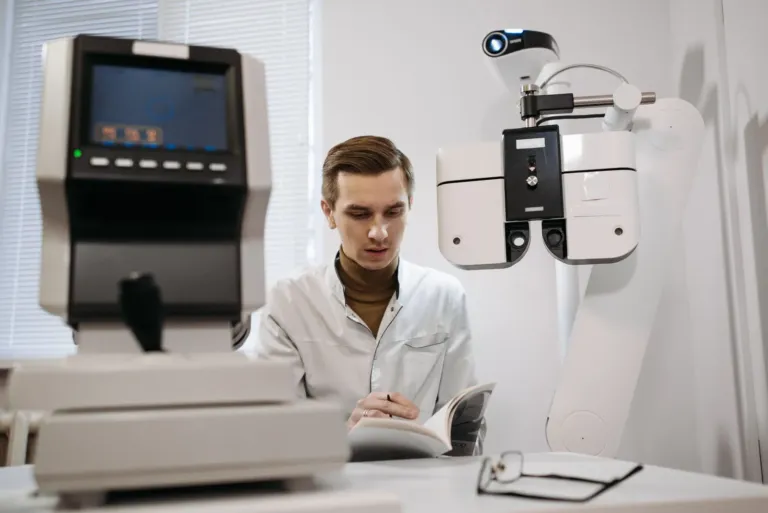
A routine eye test checks how clearly you see and also looks at the health of your eyes. It usually takes around 20 to 30 minutes and is painless.
Checking your vision
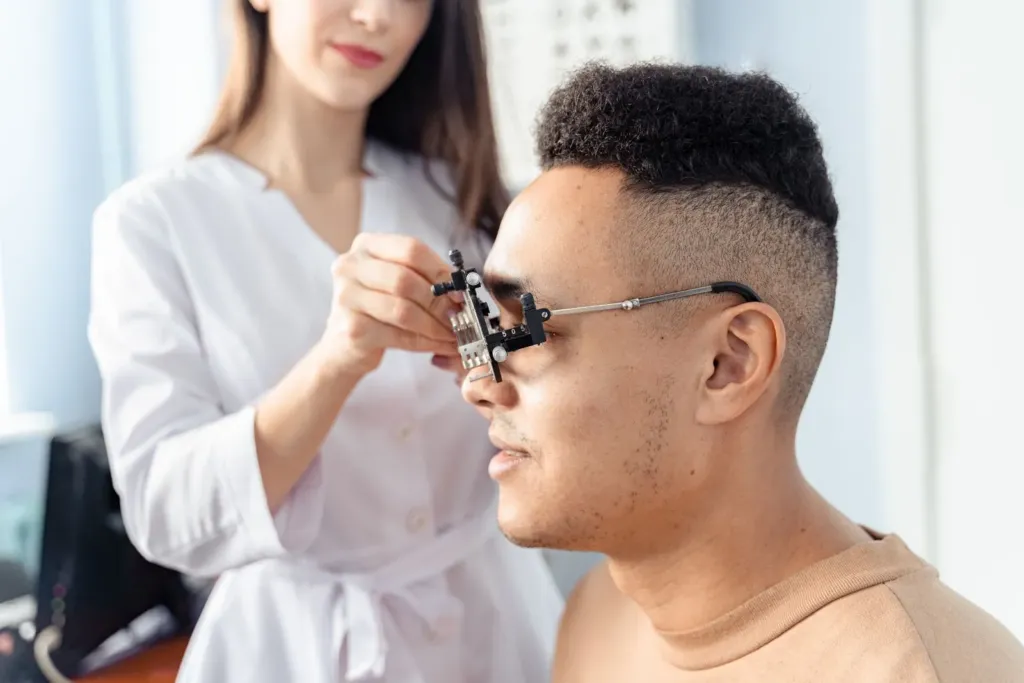
The optometrist will start by asking about your general health, medications, family history and any eye symptoms. You will then read letters on a chart while different lenses are placed in front of your eyes to find the clearest prescription.
Checking eye health
Several quick checks look at the structures inside and around the eye. These may include:
- Examining the front and back of the eye with a bright light and magnifier
- Measuring the pressure inside the eye
- Testing your peripheral vision
- Taking photographs of the retina
Eye drops
Sometimes drops are used to widen your pupils for a better view. They can blur your vision for a few hours, so avoid driving until it returns to normal and bring sunglasses.
Children, adults and older people all benefit from regular tests, as needs change over time. Bring your current glasses, a list of any medications and details of symptoms you have noticed.
NHS sight tests are free for some groups, including children, people over 60 and those with certain conditions. Contact an optometrist or your GP straight away if you notice sudden changes in vision.
Find more practical guides on Mhealer.co.uk.