
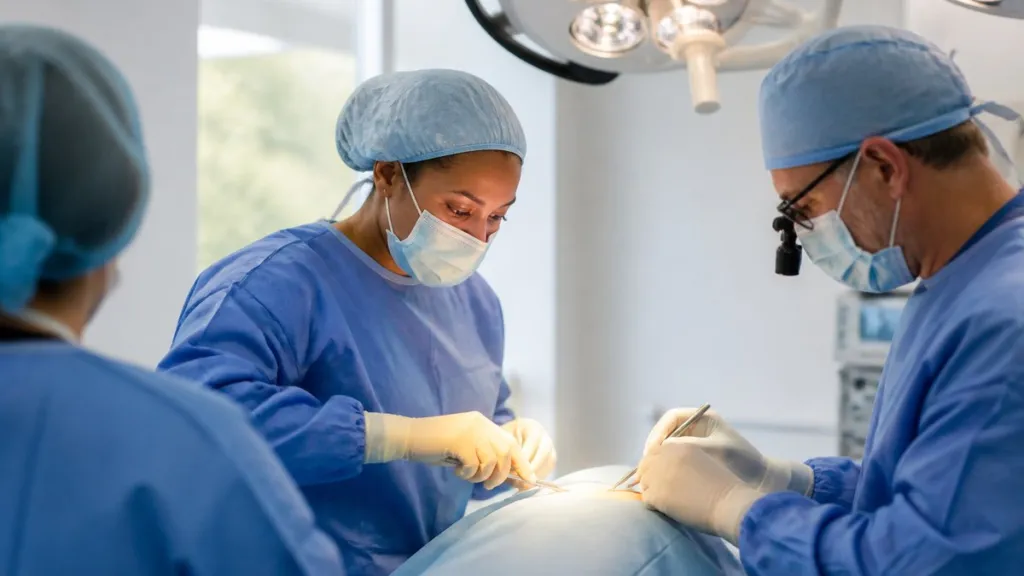
Mohs skin cancer surgery treats certain skin cancers in stages, and the process focuses on removing cancerous cells while preserving as much healthy tissue as possible. The day moves between short periods in the procedure room and longer waiting periods while tissue is examined. Understanding each step helps you plan your schedule and know what to bring. If you’re getting Mohs surgery, here’s what to expect:
Pre-surgery Consultation
Your pre-surgery visit reviews your health history and explains how Mohs skin cancer surgery works, setting expectations for treatment. The dermatology team asks about medications, allergies, and previous procedures, and they also talk about any chronic conditions. You discuss the biopsy results, while the provider explains which areas of skin will be examined during surgery.
Local Anesthetic
On the day of surgery, the treatment area is numbed with a local anesthetic, and this keeps you comfortable while you remain awake. You lie on a procedure chair or table, and the team cleans the skin with an antiseptic solution before injections begin. The anesthetic stings briefly, yet the feeling typically fades within seconds as the area becomes numb. It may involve these steps:
- The provider injects anesthetic around the visible cancer and planned margins.
- The patient’s numbness is tested before the first layer of tissue is removed.
- The anesthetic is sometimes repeated if the procedure lasts several hours.
- The numbed area may stay without normal sensation for a few hours after surgery.
Surgical Procedure
The surgical portion typically involves several stages and typically lasts two to four hours. The exact time depends on how many layers require removal. A surgeon removes a thin layer of tissue from the marked area, and the team maps this tissue to match its exact position on your skin. During this time, you sit up, read, or rest, and staff members update you when results are ready.
If the first layer shows cancer cells at the edges, the surgeon uses the map to target only those specific areas. Then, another thin layer is removed. This stepwise method preserves surrounding healthy skin. Each new layer is labeled and processed, and you again wait while the tissue is reviewed.
Once the margins are clear, attention shifts from removal to repair. Small wounds sometimes close with simple stitches. The approach depends on the size and location of the defect, and it also reflects your individual anatomy. Before you leave, the team places a dressing over the area.
Repeated Process
The repeated stages are a central feature of Mohs skin cancer surgery. This repetition allows the surgeon to track exactly where cancer cells remain, and it also limits removal to tissue that contains or borders those cells. Since the work happens in real time, you learn if the cancer has been fully removed before you leave.
During these repeated steps, communication with the team helps you understand how far along you are. You stay in the same facility while the laboratory work takes place, and this keeps the process contained within a single visit. Some patients finish in one stage. Others need several rounds, and both outcomes fit within the normal pattern for this technique.
Schedule Mohs Skin Cancer Surgery
When you are ready to schedule, a dermatology practice that performs Mohs surgery reviews your diagnosis and treatment needs, and they also explain available appointment times. The team discusses preparation steps such as adjusting certain medications, arranging a ride, or planning time away from work.