
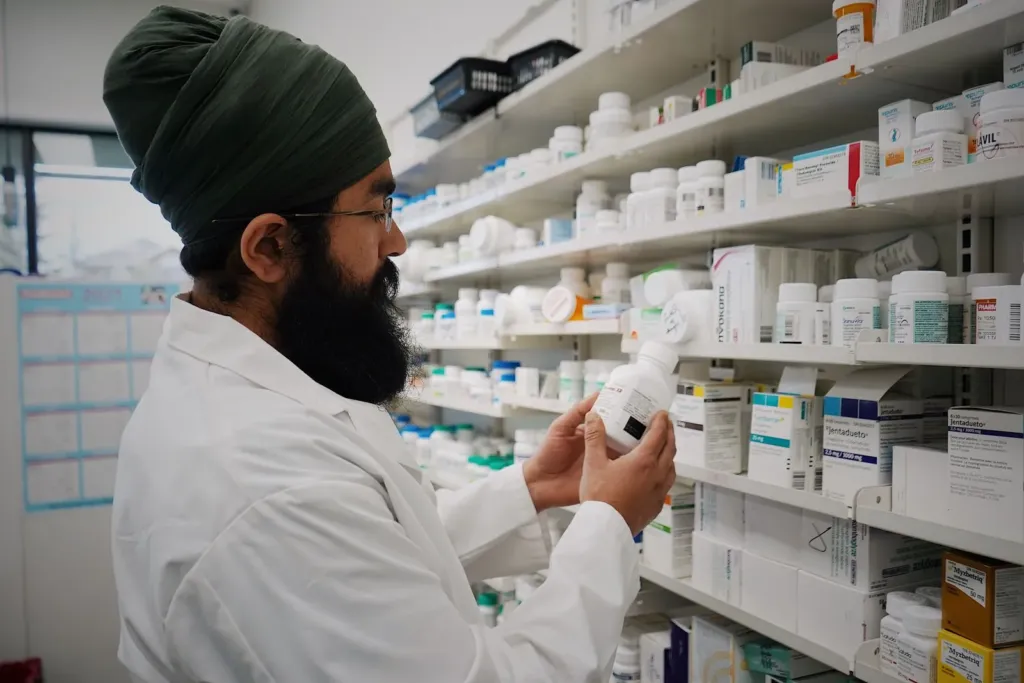
For many minor health problems, your local pharmacist is a good first place to go. Pharmacists are trained healthcare professionals who can offer advice and suggest treatments, often without an appointment.
What a pharmacist can help with
Pharmacists can advise on a wide range of common, short-lived conditions and explain how to use medicines safely.
- Coughs, colds and sore throats
- Minor skin complaints and insect bites
- Hay fever and mild allergies
- Upset stomachs and indigestion
- Aches, pains and minor injuries
In England, many pharmacies can also offer treatment for some specific conditions through the Pharmacy First service, without you needing to see a GP first.
When to see your GP instead
A pharmacist will tell you if your symptoms need further attention. You may need a GP appointment if symptoms are severe, persistent or keep coming back.
Signs to seek more help
See your GP if a minor illness is not improving after a reasonable time, if you have a long-term condition that is changing, or if you are worried about new or unexplained symptoms.
Pharmacists can also help with questions about medicines you already take, including side effects and how different medicines might interact. Many pharmacies have a private room for confidential conversations.
For urgent problems out of hours, call NHS 111. In an emergency, call 999 or go to A&E.
Explore more articles like this on Mhealer.co.uk.