
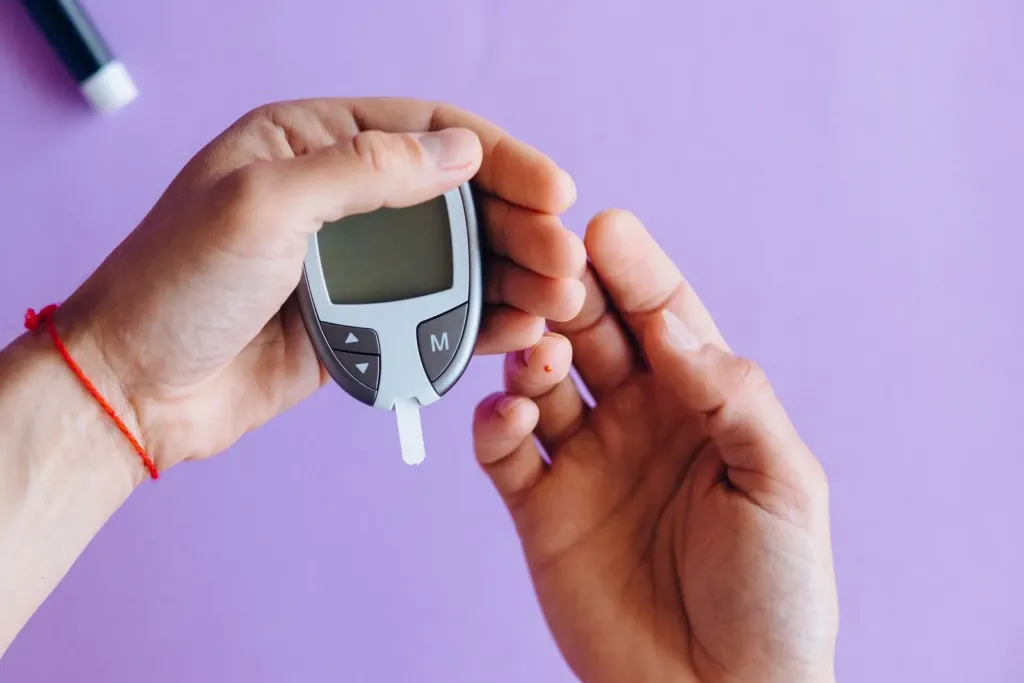
Home blood glucose testing involves pricking your fingertip, placing a small drop of blood on a test strip and reading the result on a meter. With a little practice it becomes quick and routine.
Getting a reliable result
Not everyone with diabetes needs to test at home, so follow the advice of your diabetes team on whether and when to check.
- Wash and dry your hands first, as food traces can affect readings
- Use the side of your fingertip, which is usually less sensitive
- Rotate fingers to avoid soreness
- Check strips are in date and stored as directed
Making sense of your readings
Your healthcare team will give you personal target ranges, which may differ depending on your type of diabetes, medication and circumstances. Readings change through the day with food, activity, illness and stress.
Keeping a log
Note each result with the time and any relevant details, such as a meal or exercise. Many meters store readings and some connect to apps, making it easier to share patterns at appointments.
Over time, these records help you and your team decide whether any changes to your treatment are needed. Dispose of used lancets safely in a sharps bin, which your pharmacy or GP surgery can advise on.
Contact your diabetes team or GP if readings are often outside your target range, and seek urgent help if you feel very unwell, confused or drowsy.
Explore more articles like this on Mhealer.co.uk.