
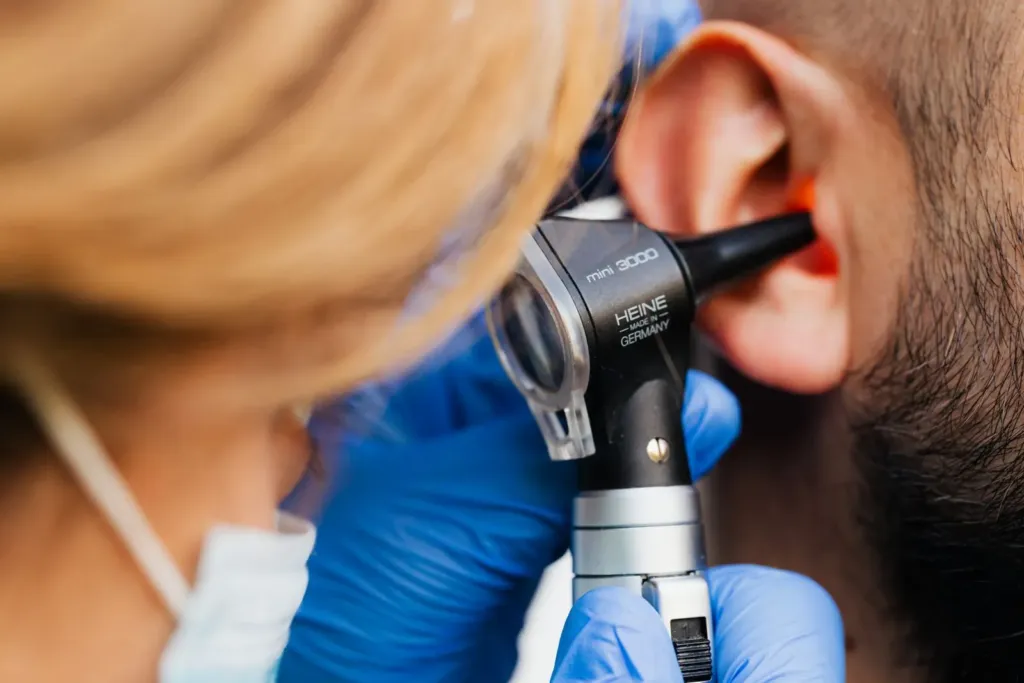
Earwax is a natural substance that protects and cleans your ears, and in most people it works its way out without help. Problems usually arise only when wax builds up or is pushed deeper into the ear.
What not to do
It is tempting to clean inside your ears, but this can do more harm than good.
- Avoid cotton buds, fingers or objects inside the ear canal
- Do not use ear candles
- Avoid over-cleaning, which can irritate the skin
- Wipe only the outer ear with a cloth
Signs of a build-up
Too much wax can cause muffled hearing, a feeling of fullness, itching, ringing in the ear or mild discomfort. Hearing aid users and people who often wear earbuds may be more prone to blockages.
Softening drops
A pharmacist can advise on ear drops, such as olive oil drops, which soften wax and help it come out naturally over a week or two. If drops do not help, a professional can remove the wax, for example with gentle suction.
Do not use drops if you have, or think you may have, a perforated eardrum.
See your GP if you have ear pain, discharge, sudden hearing loss, dizziness or symptoms that do not improve after a few days of using drops.
Find more practical guides on Mhealer.co.uk.