
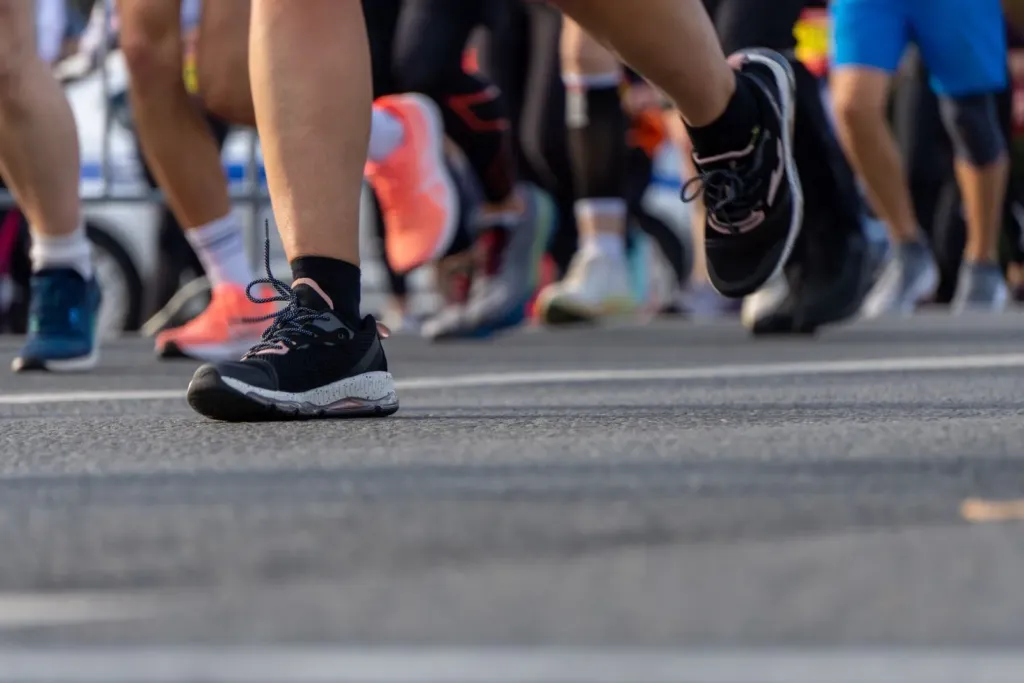
The best running shoe is one that fits well and feels comfortable from the first step. Fit and comfort matter more than brand, price or the latest technology.
Getting the fit right
Feet swell slightly during exercise and later in the day, so try shoes on in the afternoon while wearing your usual running socks.
- Leave roughly a thumb’s width between your longest toe and the shoe
- Make sure the heel feels secure without rubbing
- Check the widest part of your foot is not squeezed
- Jog a few steps in the shop or at home on a clean surface
Cushioning, support and surface
Road running usually suits a cushioned shoe with a smooth sole, while trail running needs extra grip and protection. Some runners prefer more support if their feet roll inward noticeably, but comfort should guide the choice.
When to replace them
Cushioning gradually wears down even if the outside looks fine. Signs it is time for a new pair include flattened midsoles, uneven wear on the soles and new aches in your feet, shins or knees after runs.
Introduce new shoes gradually by alternating them with your old pair for a week or two.
If you get recurring foot or heel pain when running, a podiatrist can assess your feet and gait and offer tailored advice.
Discover more everyday guides at Mhealer.co.uk.