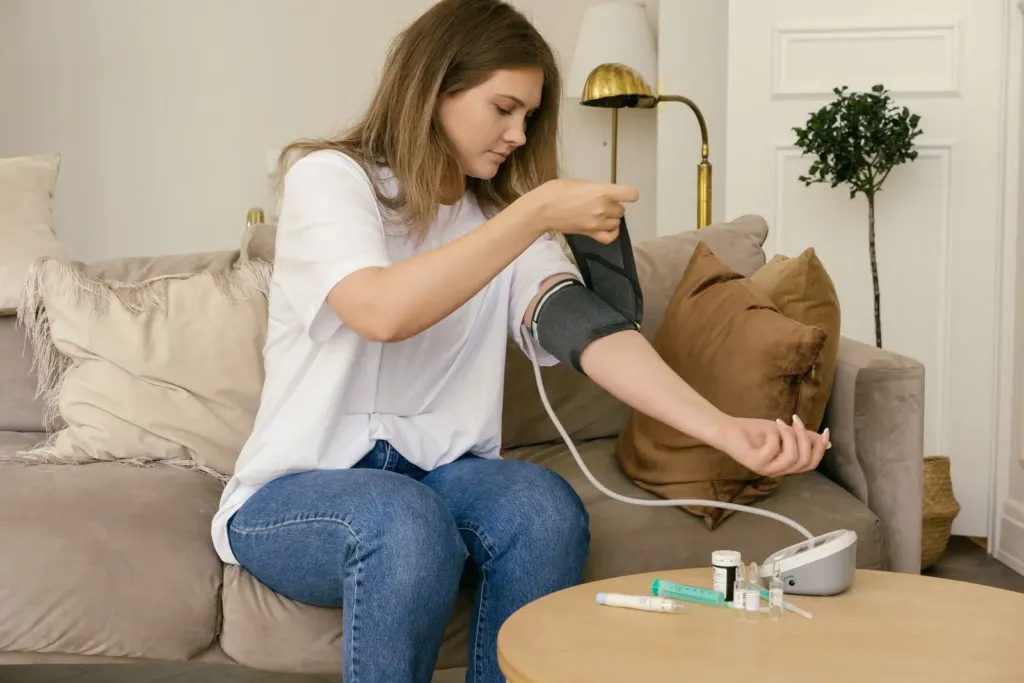
Checking your blood pressure at home can give a useful picture of your health over time. The key is to measure it the same way each time so your readings are consistent and reliable.
Getting ready to measure
Using a validated, upper-arm digital monitor with the correct cuff size is a good starting point. Your pharmacist or GP practice can advise on a suitable type.
Before taking a reading, sit quietly for about five minutes. Avoid caffeine, smoking and exercise for at least 30 minutes beforehand.
Taking a reading step by step
Small details can affect the result, so try to follow the same routine each time.
- Sit with your back supported and feet flat on the floor
- Rest your arm on a table at roughly heart height
- Place the cuff on bare skin, not over clothing
- Stay still and quiet while the monitor works
- Take two readings a minute or two apart
Keep a record
Write down each reading with the date and time, or use the monitor’s memory function. Your GP may ask you to measure at set times over several days to build an accurate picture.
One unusual reading is not usually a cause for alarm, as blood pressure naturally varies throughout the day. Patterns over time are more meaningful.
Share your readings with your GP or practice nurse, who can explain what they mean for you. Seek urgent medical help if a high reading comes with symptoms such as chest pain, severe headache or breathlessness.
For more helpful reads, visit Mhealer.co.uk.