
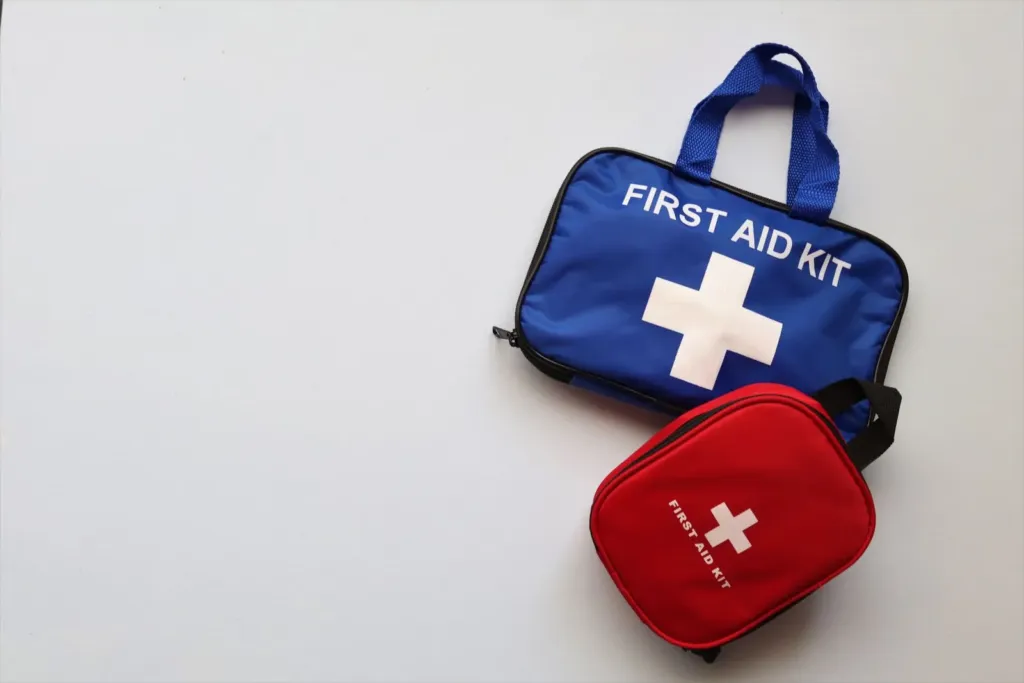
Knowing some basic first aid means you can respond calmly and quickly if someone is hurt at home. Simple skills, a well-stocked kit and knowing when to call for help make a real difference.
Stock a simple first aid kit
Keep a kit somewhere easy to reach and make sure everyone in the household knows where it is.
- Plasters in a range of sizes
- Sterile dressings and bandages
- Disposable gloves
- Scissors and tweezers
- Antiseptic wipes
- A digital thermometer
Check the kit every few months and replace anything that has been used or is out of date.
Everyday first aid basics
Minor injuries are common, especially in homes with young children. Knowing the basics helps you deal with them confidently.
Cuts and grazes
Clean the area with water, apply gentle pressure to stop bleeding and cover with a clean dressing. Seek help if bleeding is heavy or the wound is deep.
Minor burns. Cool the burn under cool or lukewarm running water for at least 20 minutes, then cover loosely with cling film or a clean, non-fluffy material. Avoid ice, creams or butter.
Consider booking a recognised first aid course, as practical training builds confidence far more than reading alone. Many courses also cover CPR and choking.
This is general information only. In an emergency, always call 999, and contact NHS 111 if you are unsure what to do.
Explore more articles like this on Mhealer.co.uk.