Tarnplanen: Uses, Materials, Benefits, and Safety
If you have recently searched for “tarnplanen,” you may be trying to understand what this unfamiliar term means and what kind of product it describes. The word may look technical, but the basic idea is simple. Tarnplanen generally refers to camouflage tarps or camouflage tarpaulins designed to provide protection from weather while also helping equipment, shelters, or covered objects blend into their surroundings.
For U.S. readers, the term may appear in searches related to camping, outdoor equipment, military surplus, hunting, wildlife observation, shelter systems, and general-purpose tarps. However, tarnplanen is better understood as a descriptive term rather than one universal product with a single design or specification.
Different tarnplanen can vary in size, material, weight, waterproofing, durability, camouflage pattern, and attachment system. Some are lightweight enough for backpacking, while others are heavier and better suited to long-term outdoor or equipment-covering applications.
This guide explains tarnplanen in simple language, including what they are, how they work, their materials, uses, benefits, limitations, safety considerations, and what U.S. buyers should look for when choosing one.
What Is Tarnplanen?
Tarnplanen are camouflage tarps designed to combine weather protection with visual blending.
Tarnplanen is a term commonly used for camouflage tarps or camouflage tarpaulins. The word has German roots, with “Tarn” relating to camouflage or concealment and “Planen” referring to tarpaulins or protective covers.
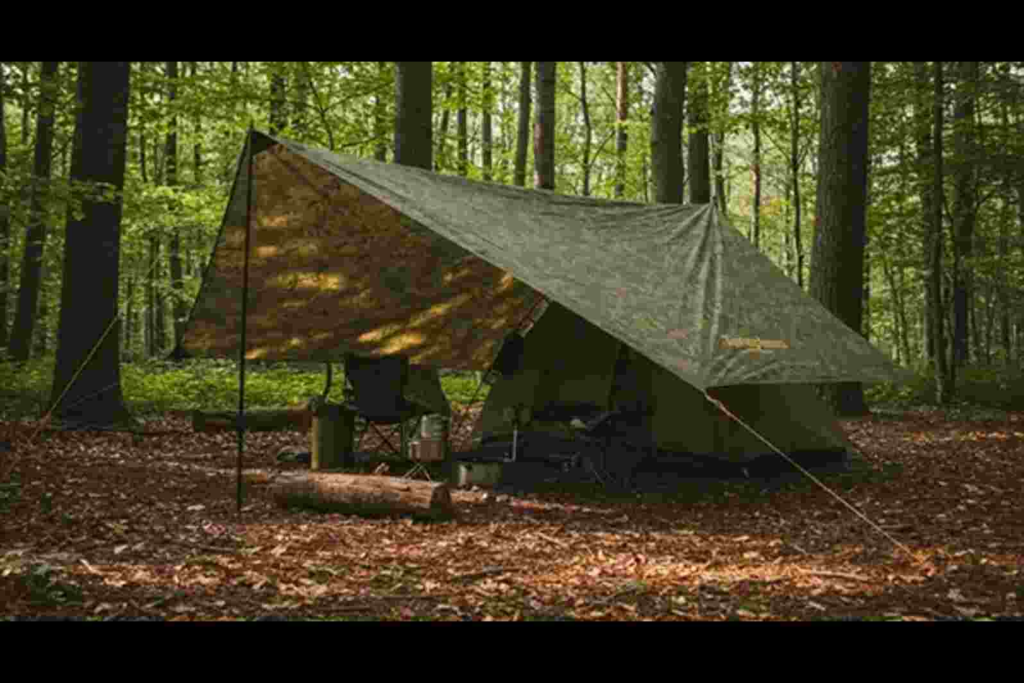
In simple terms, a tarnplanen is a tarp that usually has a camouflage pattern. Like other tarps, it can be used to cover equipment, create temporary shelter, protect outdoor items, or provide a barrier against rain, sunlight, wind, and dirt.
The camouflage feature is the main difference from many ordinary tarps. Instead of having one bright or plain color, a tarnplanen may use patterns containing green, brown, tan, gray, black, or other colors.
The goal is generally to reduce visual contrast between the tarp and its surroundings.
However, camouflage does not mean invisibility. A large tarp can still be easy to notice because of its shape, movement, shadows, incorrect pattern, or location. Its effectiveness depends heavily on the environment.
The quality of a tarnplanen also depends on its construction. A camouflage pattern alone does not tell you whether a tarp is waterproof, durable, lightweight, or suitable for severe weather.
How Do Tarnplanen Work?
Tarnplanen work through two basic functions: physical protection and visual blending.
The physical protection comes from the tarp material. Depending on its construction, it can help protect people or equipment from rain, sunlight, wind, dust, and debris.
The visual blending comes from the camouflage pattern.
A camouflage pattern usually breaks up the tarp’s large surface into different colors and shapes. When those colors are reasonably similar to the surrounding environment, the tarp may be less visually noticeable.
For example, a green and brown pattern may blend better in a forest than a bright blue tarp.
However, camouflage performance depends on many factors. These include distance, lighting, terrain, vegetation, weather, pattern, movement, and the shape of the covered object.
This is why a tarnplanen should be viewed as a camouflage cover, not an invisibility system.
The physical characteristics are equally important. Reinforced edges, strong grommets, quality stitching, waterproof coatings, and suitable fabric can determine whether a tarp performs well outdoors.
Tarnplanen vs. Regular Tarps
Tarnplanen are essentially a specialized type of tarp, so they share many characteristics with standard tarpaulins.
A regular tarp is usually designed primarily for protection or covering. It may be blue, black, silver, green, brown, or another solid color.
A tarnplanen adds camouflage to the basic tarp concept.
Also Read:Loralee Czuchna: Biography, Marriage to Don Knotts & Life Story
| Feature | Tarnplanen | Regular Tarp |
| Camouflage pattern | Usually included | Usually not |
| Weather protection | Common | Common |
| Shelter use | Yes | Yes |
| Equipment covering | Yes | Yes |
| Visual blending | Important feature | Usually not a main goal |
| Materials | Synthetic or natural fabrics | Many material types |
| Attachment points | Common | Common |
| Outdoor use | Common | Common |
This does not mean a tarnplanen is automatically stronger than a regular tarp.
A high-quality plain tarp can be more durable than a low-quality camouflage tarp. When comparing products, look at fabric weight, construction, seams, waterproofing, grommets, and intended use.
The camouflage pattern should be considered an additional feature rather than a guarantee of better performance.
History and Background of Tarnplanen
Camouflage has been used for many years in military, hunting, wildlife observation, and outdoor applications.
The basic idea is to reduce the visual contrast between an object and its surroundings. Military organizations have historically used camouflage clothing, nets, covers, paint, and other equipment for this purpose.
German military equipment is also associated with several well-known camouflage patterns, including Flecktarn. This history helps explain why German-related terminology can appear in discussions about camouflage outdoor equipment.
Modern civilian use is much broader.
Today, camouflage tarps can be found in camping, outdoor recreation, military surplus, wildlife photography, hunting, equipment storage, and general outdoor work.
This means a modern tarnplanen should not automatically be considered military equipment. A camouflage tarp sold to civilians may simply be an outdoor shelter or cover with a camouflage design.
The historical connection to military equipment explains some of the terminology and product styles, but it does not define every modern camouflage tarp.
Materials Used in Tarnplanen
The material used to make a tarnplanen has a major effect on its weight, durability, waterproofing, flexibility, and price.
Polyester
Polyester is widely used in outdoor equipment because it can provide a useful balance between weight and durability.
A polyester tarp may also have a waterproof coating that improves protection from rain.
It can be a practical choice for camping and general outdoor use.
Nylon
Nylon is popular when low weight is important.
Ripstop nylon is particularly common in lightweight outdoor equipment. Its woven structure is designed to help limit the spread of small tears.
Lightweight nylon can be useful for backpackers because it packs down relatively small.
Canvas
Canvas is heavier than many synthetic materials but can be durable and suitable for demanding applications.
Traditional-style outdoor and military surplus tarps may use canvas or canvas blends.
Its main disadvantage for hikers is weight. A canvas tarp can be excellent for a base camp or vehicle camping but less convenient for long-distance backpacking.
Polyethylene
Polyethylene is common in affordable general-purpose tarps.
It can provide useful water resistance and is available in many thicknesses and qualities.
Lightweight polyethylene tarps may be suitable for temporary applications, while heavier versions can provide greater durability.
PVC-Coated Fabric
PVC-coated materials can offer strong resistance to water and wear.
They are often heavier than nylon or lightweight polyester, but that additional weight can be acceptable for long-term covering or work-related applications.
When comparing materials, there is no single best option. The correct material depends on how the tarnplanen will be used.
Key Features of Tarnplanen
The appearance of a tarnplanen is easy to notice, but the construction details are often more important.
Size
The tarp should be large enough for its intended purpose.
A tarp for covering a backpack is very different from one intended to create a shelter for several people.
Remember that the advertised size may not always equal the exact usable area after hemming and reinforcement.
Reinforced Edges
The edges receive significant stress when the tarp is secured.
Reinforced hems can help distribute tension and reduce the chance of tearing.
Grommets
Grommets provide attachment points for rope, cord, stakes, or other securing systems.
Strong grommets are important because they can experience significant force during windy conditions.
Waterproofing
A camouflage pattern does not automatically make a tarp waterproof.
Some products use coatings to improve water resistance. Others may be naturally water-resistant to some degree.
Always check the manufacturer’s specifications.
UV Resistance
Sunlight can damage outdoor fabrics over time.
If a tarnplanen will remain outside for long periods, UV resistance can be an important feature.
Weight
Weight matters when carrying the tarp.
A heavy-duty tarp may be excellent for vehicle camping but inconvenient for backpacking.
Lightweight materials are usually more attractive to hikers, although extremely lightweight fabrics may require more careful handling.
Common Uses of Tarnplanen
Tarnplanen have many possible outdoor applications.
Camping
Camping is one of the most practical civilian uses.
A tarnplanen can work as an overhead rain cover, simple shelter, ground cover, windbreak, gear cover, or privacy screen.
Its usefulness depends on the size and construction of the tarp.
Backpacking
A lightweight camouflage tarp can provide a compact shelter option for experienced backpackers.
The main advantage is versatility. One piece of equipment can serve several functions.
The main limitation is that a tarp generally provides less enclosed protection than a traditional tent.
Wildlife Photography
Wildlife photographers may use camouflage covers to reduce visual disturbance while observing animals.
A tarp can also provide shade and weather protection.
Responsible wildlife observation is important. A camouflage cover should not be used to ignore wildlife regulations, private-property restrictions, or ethical guidelines.
Hunting
Camouflage tarps can also appear in hunting equipment markets.
Their use must always comply with applicable federal, state, and local laws. Hunting rules vary by state and can change by season and species.
A camouflage tarp does not change any legal requirements.
Outdoor Equipment Protection
A tarnplanen can be used to cover tools, outdoor furniture, firewood, camping equipment, gardening supplies, or other objects.
In these situations, the camouflage pattern may be mostly an aesthetic choice.
Temporary Shelter
A properly secured tarp can create a temporary shelter from rain and sun.
Different setups can create different levels of protection.
Also Read:G15Tools Com Contact: Complete Guide to Contact G15Tools
However, severe weather requires greater caution. A basic tarp should not be treated as a replacement for a properly designed emergency shelter during dangerous conditions.
Benefits of Tarnplanen
Tarnplanen offer several practical benefits.
Weather Protection
A quality tarp can protect equipment and people from rain, sunlight, and wind.
The exact level of protection depends on the fabric and construction.
Visual Blending
Camouflage patterns can reduce visual contrast when they match the surrounding environment.
This can be useful for some outdoor activities.
Versatility
One tarp can perform several different jobs.
This makes it attractive to people who want multipurpose outdoor equipment.
Portability
Many modern tarnplanen are lightweight and foldable.
This makes them easier to carry than some larger shelter systems.
Reusability
A quality tarp can be used for many seasons when properly maintained.
Cleaning, drying, inspection, and correct storage can extend its service life.
Limitations of Tarnplanen
Tarnplanen also have limitations that buyers should understand.
First, camouflage does not make a person or object invisible.
Second, not every tarp is suitable for heavy rain or severe wind.
Third, heavy-duty materials can be difficult to carry.
Fourth, low-quality grommets and seams can fail even when the main fabric appears strong.
Fifth, camouflage may sometimes reduce safety. During an emergency, a bright-colored tarp may be easier for rescuers to see.
These limitations show why the right product depends on the specific situation.
A tarp designed for recreational camping may not be appropriate for long-term outdoor storage or extreme weather.
How to Choose the Right Tarnplanen
Start by identifying the main purpose.
If you need a backpacking tarp, prioritize low weight and compact packing.
If you need a long-term equipment cover, durability and weather resistance may matter more.
If you want visual blending, choose a camouflage pattern appropriate for the environment.
Consider the following factors:
- Finished dimensions
- Fabric type
- Total weight
- Waterproofing
- UV resistance
- Tear resistance
- Seam construction
- Grommet quality
- Reinforced edges
- Packed dimensions
- Warranty
- Manufacturer information
Do not choose a product based only on phrases such as “military grade” or “heavy duty.”
Look for actual specifications.
A trustworthy product listing should clearly explain what the tarp is made from, how large it is, how much it weighs, and what type of weather protection it provides.
How to Set Up and Use Tarnplanen
A good setup begins with choosing secure attachment points.
Avoid unstable branches, weak structures, or locations where falling objects could create danger.
When creating a tarp shelter, give the tarp enough slope for rainwater to run off. A completely flat tarp can collect water and place additional stress on the fabric and attachment points.
Use appropriate rope or cord.
Avoid putting extreme tension on a single grommet.
If strong winds are expected, consider taking the tarp down rather than trying to reinforce it indefinitely.
Before relying on a tarp shelter during an overnight trip, practice setting it up in safe conditions.
This helps you understand how the fabric, attachment points, and shelter design behave before you encounter difficult weather.
How to Clean and Maintain Tarnplanen
Regular maintenance can help extend the useful life of a tarnplanen.
After outdoor use, remove leaves, dirt, mud, and other debris.
For light dirt, clean water may be enough.
If additional cleaning is required, use a mild cleaning solution that is compatible with the fabric.
Avoid aggressive chemicals unless the manufacturer specifically recommends them. Strong cleaners may damage waterproof coatings or printed camouflage patterns.
Most importantly, allow the tarp to dry completely before folding and storing it.
Inspect the tarp regularly for:
- Small tears
- Damaged seams
- Loose grommets
- Worn edges
- Peeling coatings
- Mold or mildew
- Brittle fabric
Repair minor damage when appropriate.
If the fabric has become brittle or the attachment points are badly damaged, replacement may be safer.
Tarnplanen for Camping and Outdoor Activities
For U.S. campers, tarnplanen can be a useful addition to a larger outdoor gear system.
A camouflage tarp can provide overhead protection at a campsite, cover equipment, or serve as a lightweight shelter.
For backpacking, weight becomes particularly important.
A large canvas tarp may offer excellent durability but add too much weight for a long hike. A lightweight nylon or polyester tarp may be a better choice.
For vehicle camping, weight may matter less, allowing users to choose larger and heavier products.
Local rules should also be considered. National parks, forests, wildlife areas, campgrounds, and private properties can have different rules about temporary structures, tree attachments, camping locations, and outdoor activities.
Always follow the rules for the specific location.
Tarnplanen Safety and Legal Considerations
Using a tarp is generally straightforward, but basic safety is important.
Do not assume that a durable tarp is fireproof.
Keep synthetic tarps away from campfires, stoves, heaters, and other high-heat sources unless the manufacturer specifically states that the product is designed for such conditions.
Make sure ropes and cords do not create dangerous trip hazards.
Do not install a tarp near electrical wires or unstable structures.
In severe weather, a tarp may become difficult to control because of wind.
Legal considerations depend on how and where the tarp is used.
For hunting, follow current state wildlife regulations.
For public lands, follow the rules of the relevant land-management agency.
For private property, obtain permission when necessary.
For wildlife observation, follow applicable wildlife-protection rules and avoid disturbing animals.
The important point is that the word “tarnplanen” does not create any special legal status. The legality of its use depends on the activity, location, and applicable laws.
How to Buy Tarnplanen in the United States
U.S. buyers may find camouflage tarps through outdoor stores, camping retailers, military surplus suppliers, hunting stores, hardware retailers, and online marketplaces.
Because the term is less familiar to many American shoppers, search results may contain different types of products.
Try comparing terms such as “camouflage tarp,” “camo tarp,” “waterproof camouflage tarp,” “woodland tarp,” and “military surplus tarp.”
Then compare specifications rather than product names.
Also Read:BrassSmile: Complete Guide to Dental Care and Smile Improvement
Before buying, check:
- Exact dimensions
- Fabric material
- Weight
- Waterproofing claims
- UV resistance
- Grommet construction
- Reinforced edges
- Customer reviews
- Manufacturer information
- Return policy
Be careful with listings that provide impressive marketing language but very little technical information.
A reliable product description should give you enough information to understand what you are actually buying.
Frequently Asked Questions About Tarnplanen
What Is the Main Purpose of Tarnplanen?
The main purpose of tarnplanen is to provide the basic protection of a tarp while using a camouflage pattern to help the covered object or shelter blend with its surroundings.
Depending on the design, it can be used for camping, outdoor shelter, equipment protection, wildlife observation, and other lawful outdoor activities.
Are Tarnplanen Waterproof?
Some tarnplanen are waterproof or highly water-resistant, but not all products have the same level of protection.
Waterproofing depends on the fabric, coating, seams, and overall construction. Always check the manufacturer’s specifications instead of assuming that every camouflage tarp is waterproof.
Can Tarnplanen Be Used for Camping?
Yes. Tarnplanen can be used for camping as rain covers, overhead shelters, windbreaks, ground covers, or equipment covers.
Lightweight models may also work for backpacking. However, users should consider weather conditions, tarp size, attachment points, and local camping rules before relying on one as a shelter.
How Long Can Tarnplanen Last?
The lifespan varies based on material, quality, frequency of use, weather exposure, and maintenance.
A well-maintained tarp can last for years, while one exposed to strong sunlight, heavy wind, abrasion, and frequent use may wear out sooner. Regularly checking the fabric, seams, coating, and grommets can help identify when replacement is necessary.
Are Tarnplanen the Same as Military Tarps?
Not necessarily. Tarnplanen are camouflage tarps, and some may have military-inspired designs or come from military surplus sources.
However, many camouflage tarps are made specifically for civilian camping, hunting, photography, outdoor recreation, or general covering. The actual material and construction should be checked rather than assuming a military origin.
Conclusion
Tarnplanen are best understood as camouflage tarps that combine practical outdoor protection with a camouflage design.
They can be useful for camping, backpacking, wildlife photography, hunting, outdoor work, equipment protection, and temporary shelter. Their value comes from their combination of versatility, weather protection, portability, and visual blending.
However, not every tarnplanen is the same. Materials, dimensions, waterproofing, weight, stitching, grommets, coatings, and durability can vary significantly.
Buyers the best approach is to focus on actual product specifications instead of relying only on the term “tarnplanen” or marketing phrases such as “military grade.”
A good tarnplanen should match the environment, activity, weather conditions, and level of durability you need. With proper setup, cleaning, storage, and inspection, a quality camouflage tarp can become a useful and reusable part of an outdoor gear collection.